Overview
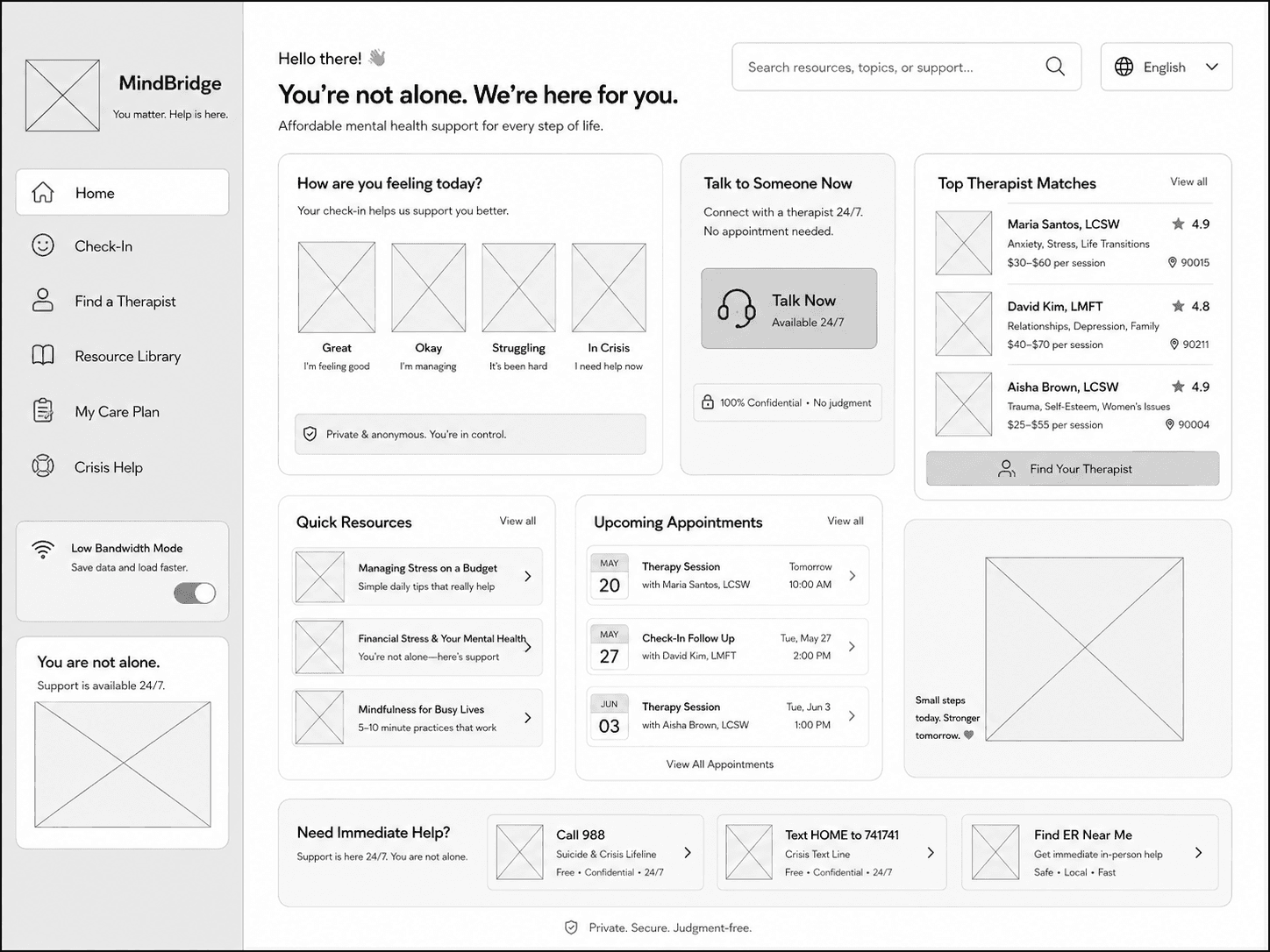
MindBridge is a conceptual product designed to address one of today's most pressing challenges: making mental health care more accessible, affordable, and approachable for low-income workers. The platform connects users with affordable therapists, crisis resources, multilingual support, and personalized care plans through a responsive, human-centered digital experience. The objective was to reduce barriers that often prevent individuals from seeking help—including cost, accessibility, language, stigma, and complexity—while creating a product that feels supportive, trustworthy, and empowering from the very first interaction. Rather than overwhelming users with clinical information, the experience prioritizes emotional reassurance, clear navigation, and immediate access to care. The design process began with user research to better understand the needs, behaviors, motivations, and pain points of individuals balancing demanding work schedules, financial constraints, and limited access to healthcare. Personas representing hourly workers, single parents, multilingual households, and uninsured individuals helped shape key product decisions—from simplified navigation and crisis-first information architecture to multilingual support and low-bandwidth functionality. These insights ensured every design decision remained grounded in real user needs rather than assumptions. Usability testing played a critical role throughout the project, validating navigation patterns, reducing cognitive load, and refining task flows for high-priority actions such as finding a therapist, completing a daily mood check-in, and accessing crisis resources. Iterative testing informed improvements to hierarchy, content organization, touch target sizing, and interaction design, helping create an experience that feels intuitive even during moments of stress or emotional distress. Accessibility was treated as a core design principle rather than a final checklist. The interface was designed with WCAG AA color contrast, readable typography, generous spacing, 48–56px touch targets, keyboard-friendly interactions, multilingual localization, screen-reader support through semantic labeling, and a low-bandwidth mode to improve performance for users with limited internet access. Public access to crisis resources without requiring authentication further removes barriers during moments when immediate support is most critical. The resulting product demonstrates how thoughtful UX strategy, inclusive research, and accessible design can transform complex healthcare services into an experience that is compassionate, trustworthy, and easy to navigate. MindBridge illustrates how digital products can reduce friction, build confidence, and help underserved communities access meaningful mental health support when they need it most.
MindBridge is a conceptual product designed to address one of today's most pressing challenges: making mental health care more accessible, affordable, and approachable for low-income workers. The platform connects users with affordable therapists, crisis resources, multilingual support, and personalized care plans through a responsive, human-centered digital experience. The objective was to reduce barriers that often prevent individuals from seeking help—including cost, accessibility, language, stigma, and complexity—while creating a product that feels supportive, trustworthy, and empowering from the very first interaction. Rather than overwhelming users with clinical information, the experience prioritizes emotional reassurance, clear navigation, and immediate access to care. The design process began with user research to better understand the needs, behaviors, motivations, and pain points of individuals balancing demanding work schedules, financial constraints, and limited access to healthcare. Personas representing hourly workers, single parents, multilingual households, and uninsured individuals helped shape key product decisions—from simplified navigation and crisis-first information architecture to multilingual support and low-bandwidth functionality. These insights ensured every design decision remained grounded in real user needs rather than assumptions. Usability testing played a critical role throughout the project, validating navigation patterns, reducing cognitive load, and refining task flows for high-priority actions such as finding a therapist, completing a daily mood check-in, and accessing crisis resources. Iterative testing informed improvements to hierarchy, content organization, touch target sizing, and interaction design, helping create an experience that feels intuitive even during moments of stress or emotional distress. Accessibility was treated as a core design principle rather than a final checklist. The interface was designed with WCAG AA color contrast, readable typography, generous spacing, 48–56px touch targets, keyboard-friendly interactions, multilingual localization, screen-reader support through semantic labeling, and a low-bandwidth mode to improve performance for users with limited internet access. Public access to crisis resources without requiring authentication further removes barriers during moments when immediate support is most critical. The resulting product demonstrates how thoughtful UX strategy, inclusive research, and accessible design can transform complex healthcare services into an experience that is compassionate, trustworthy, and easy to navigate. MindBridge illustrates how digital products can reduce friction, build confidence, and help underserved communities access meaningful mental health support when they need it most.
CLIENT
MindBridge
YEAR
2025
SERVICES
Product Design UX Research User Personas User Flows Information Architecture UX/UI Design Design Systems Responsive Design Accessibility Inclusive Design Usability Testing Interaction Design AI Design Mobile Design Human-Centered Design
ROLE
Lead


Other projects